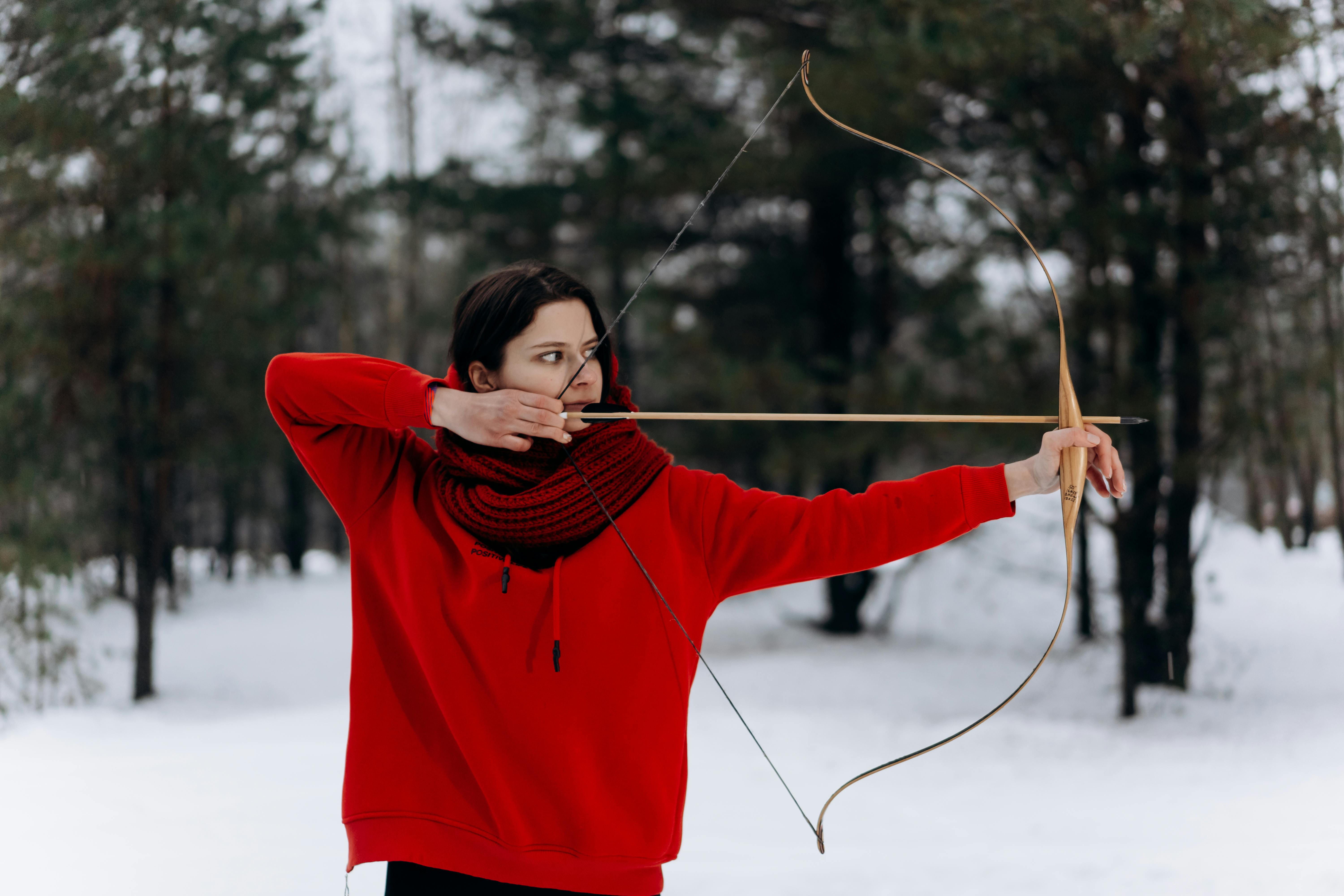
Cold-weather archery is a discipline of vigilance. When temperatures drop below freezing, the behavior of natural materials changes drastically. Wood fibers stiffen, natural animal glues contract, and bowstrings can become brittle. Navigating the snowy woodlands of Sweden or Finland requires a specific set of tactical adjustments.
Adjusting the Draw and Anchor
Heavy winter clothing alters an archer's natural draw length and anchor points. Bulky jackets can catch the bowstring upon release, disrupting the arrow's flight path. Nordic archers learn to wear tightly-bound sleeve wraps and adjust their anchor slightly forward—drawing to the corner of the mouth (the 'Turkish anchor') rather than behind the jaw—to ensure a clean release path.
Protecting the Bow
A cold bow must never be drawn immediately. Drawing a frozen wooden bow can cause instant fracture. Before shooting, the archer must warm the limbs by rubbing them briskly with a piece of dry leather, friction-heating the fibers. Furthermore, natural sinew or hide glue wraps must be kept dry; moisture in sub-zero weather freezes, expands, and splits backing materials apart.
String Maintenance
Natural fibers like linen or hemp are highly susceptible to moisture-induced rot and stiffness in the snow. Waxing the string with a mixture of beeswax and pine resin shields the fibers from moisture, maintaining elasticity and preventing string snap in freezing temperatures.