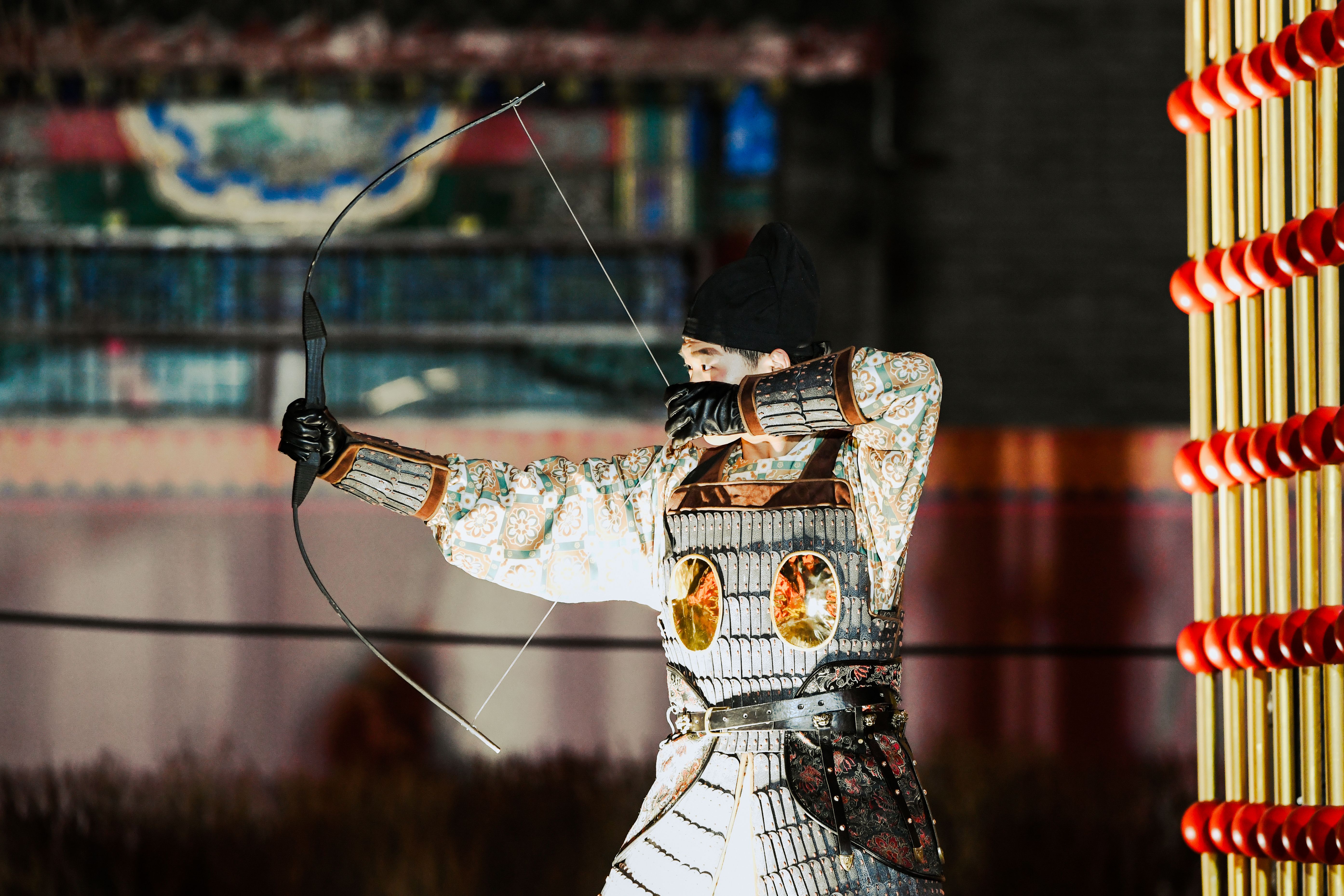
The Gakgung (Korean horn bow) is one of the most compact and highly reflexed composite bows in the world. Standing less than four feet tall, this small warbow was capable of launching arrows over 150 yards in combat. Its construction is a meticulous process using seven natural materials: water buffalo horn, cow sinew, bamboo, mulberry wood, oak, croaker fish bladder glue, and birch bark wrapping.
The Lamination Process
The core of the Gakgung is a laminate of split bamboo and mulberry wood, joined at the grip with oak. On the belly, long strips of water buffalo horn (imported from Southeast Asia) are glued to support the massive compression forces. On the back, shredded cow sinew is layered in hot glue, cured, and sanded. The entire bow is then wrapped in waterproof birch bark (called 'hwapi') to protect the organic glues from moisture.
The Curing and Heat Treatment
Gakgung bows are built inside out: when unstrung, the limbs curl forward in a deep loop resembling a circle. Stringing the bow requires placing it in a specialized heating cabinet (called a 'jeombang') to warm the glue and fibers, making them flexible. The bowyer then uses a wooden framing tool (called a 'jiadong') to bend the limbs back and hook the string. This high-tension setup gives the Gakgung its characteristic explosive speed and flat trajectory.
Technique of the Korean Release
Shooting the Gakgung requires a deep thumb draw to the shoulder, with the bow arm tilted slightly outward. This stance, known as 'jeong-ga-gwan,' aligns the bow's short limbs and prevents the short string from pinching the fingers at full draw. The release is accompanied by a subtle forward twist of the wrist, allowing the bow to pivot in the hand and absorb the recoil energy cleanly.