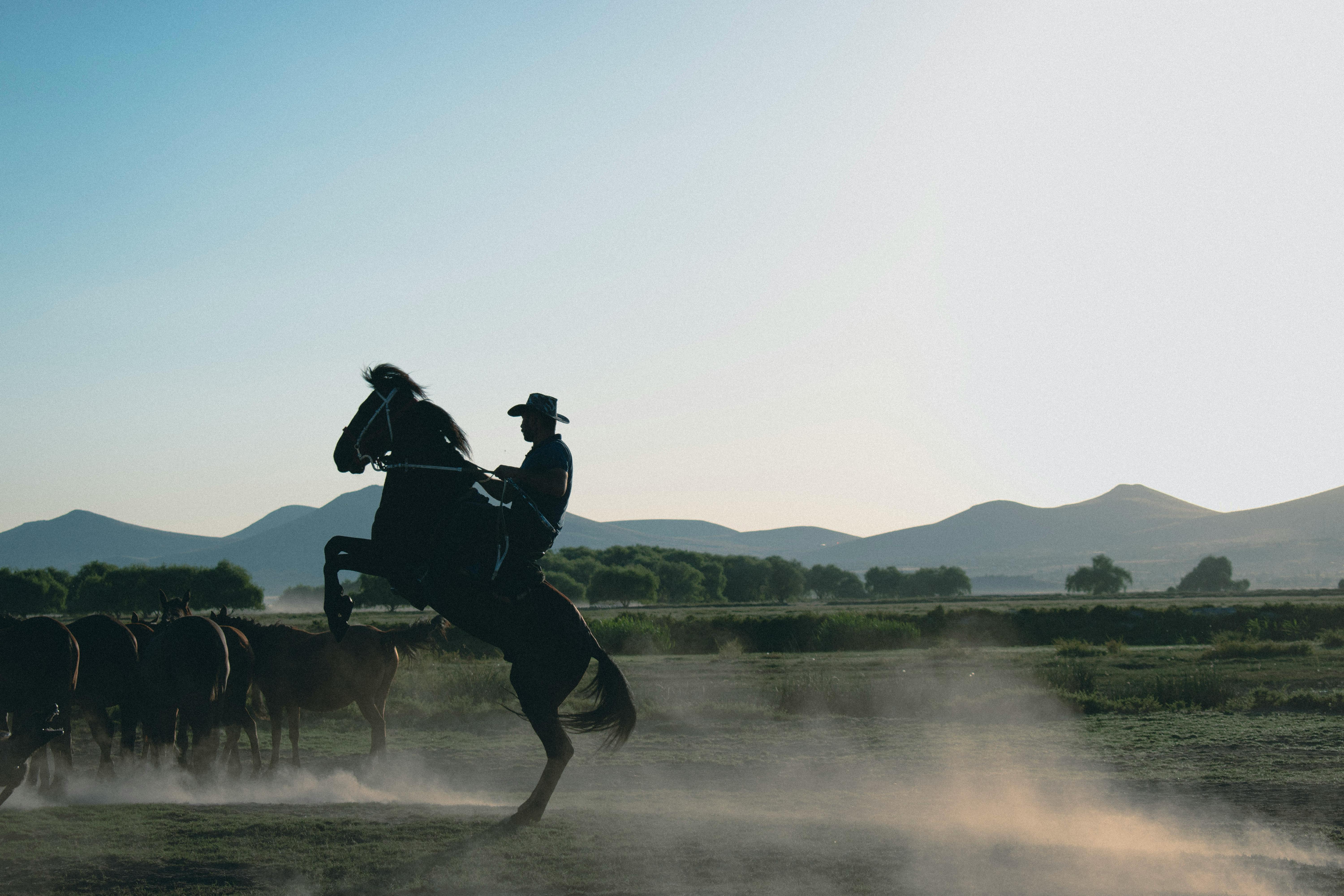
Shooting an arrow at a target while galloping at 30 miles per hour requires the ultimate synchronization of human, horse, and bow. In the nomadic traditions of Mongolia, Kyrgyzstan, and Kazakhstan, horse archery was not a hobby; it was a way of life. The core of the discipline lies in the rider's seat and the timing of the release.
The Dynamic Seat
A horse archer does not sit heavily in the saddle. Instead, they stand slightly in the stirrups, keeping their knees and hips bent and flexible. This posture acts as a shock absorber, separating the movement of the horse's back from the archer's upper body. The torso remains stable and independent, allowing the archer to rotate their waist and aim in any direction—forward, sideways, or backward (the famous 'Parthian shot').
The Suspension Phase Release
A galloping horse has a phase of flight when all four hooves are off the ground—the suspension phase. During this micro-second of suspension, the horse's body travels in a smooth, level plane, free from the jarring impact of hooves hitting the earth. The archer must time their draw and release to coincide exactly with this suspension phase. Releasing at this instant ensures maximum stability and target accuracy.
Training the Mount
Not every horse can be a bow-horse. The mount must be desensitized to the sound of the bowstring's snap, the flapping of feathers, and the whistling of arrows flying past its ears. The horse is trained to run at a steady, consistent gallop along a straight track (the 'corridor') without relying on rein contact, as the archer must use both hands to handle the bow and load arrows.