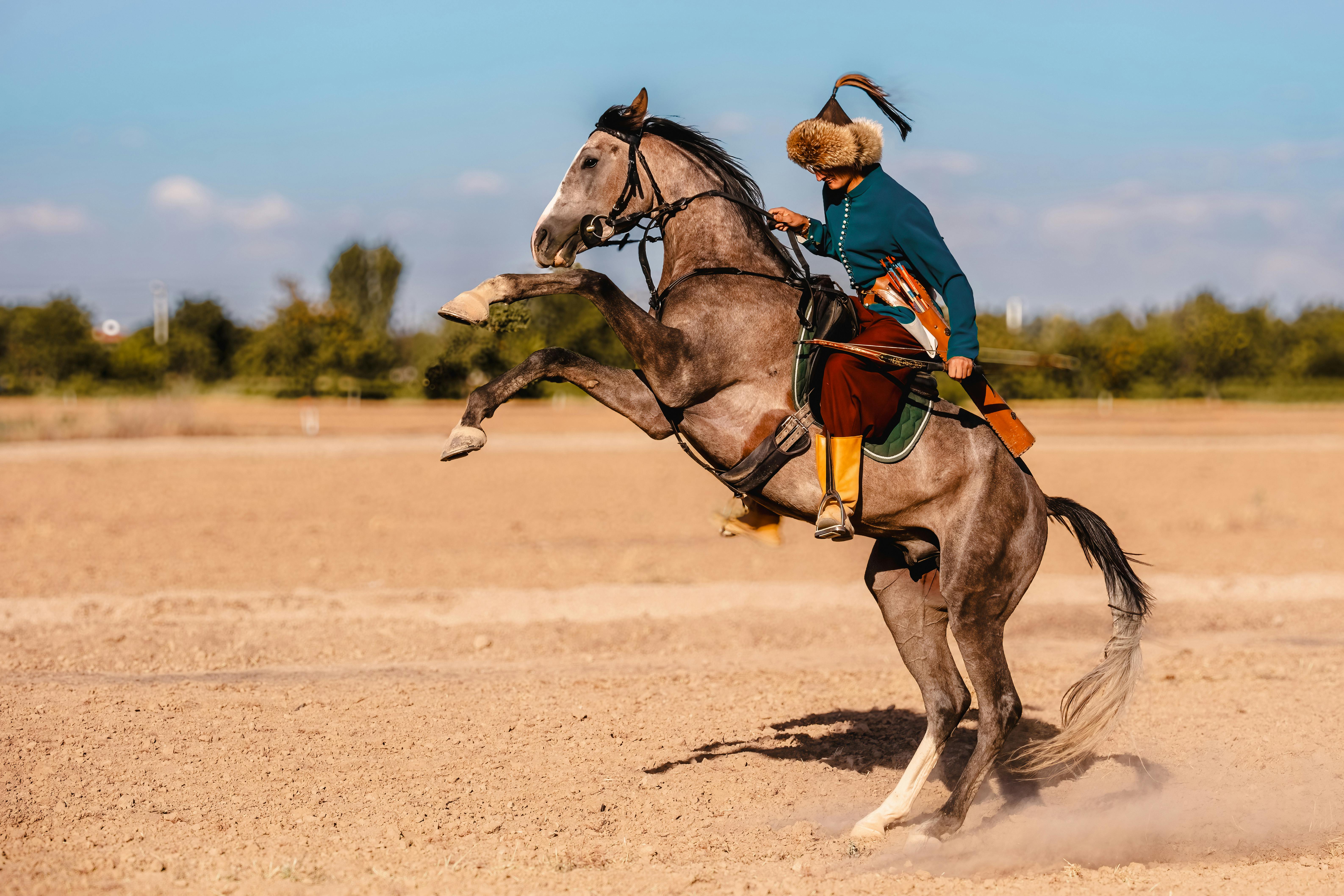
For centuries, the horse archers of the Eurasian Steppe dominated the battlefields using a drawing technique completely different from the European Mediterranean draw. Instead of using three fingers to pull the string, nomadic archers utilized a single finger: the thumb. To protect the thumb and ensure a clean release, they wore rings crafted from bone, horn, jade, or metal.
The Thumb Lock Mechanics
In a thumb draw, the string is hooked behind the first joint of the thumb. The index finger is then folded over the thumb nail, locking the thumb in place. This creates a secure, mechanical clamp. Because the fingers do not twist the string, the thumb draw allows for a very narrow string angle, which is essential when shooting compact, high-performance composite reflex bows from horseback.
"The thumb draw is a mechanical release built from bone and muscle. It locks the string securely during horse movement and releases it with minimal friction."
Sparing the Arrow and Left-Side Loading
In a Mediterranean draw, the arrow rests on the left side of the bow (for a right-handed archer). In a thumb draw, the arrow is placed on the right side. The drawing motion pushes the arrow shaft against the bow window, preventing it from falling off during heavy horse movement. This placement also allows the archer to load arrows extremely quickly, sliding them over the right side of the bow without crossing their sightline.
Choosing a Ring
Thumb rings vary in shape across historical regions. The Mongolian ring is typically a thick cylindrical band with a protruding lip to catch the string, while Turkish and Ottoman rings feature a sloped, shield-like tongue (called a 'kulak') that extends back along the pad of the thumb. The ring must fit perfectly; too tight and it cuts off circulation, too loose and it slips off mid-draw, risking injury.